























“I’ve waited many years”, the opening lyric to Fiona Apple’s 2020 record “Fetch the Bolt Cutters”, is a fitting one, both in the subject matter of the song but also seeing that it was her first album in nearly 8 years. Since her debut at the age of 19 with 1996’s “Tidal”, Apple has only released a total of five album. “Tidal” shows an artist debuting as a fully formed act, 1999’s “When the Pawn…” is a record built from anger, both from romance and her public reception at the time. It’s a phenomenal record, defying the sophomore slump and featuring cabaret and jazz inspired production paired with cutting lyricism. She would take 6 years to release her follow-up, 2005’s “Extraordinary Machine”, and another 7 to follow that record up with 2012’s “The Idler Wheel…”.
Each of her records have pushed her into a more experimental corner of the singer/songwriter genre, with “The Idler Wheel” being a very jazzy record featuring distinct piano, bass, and percussion (especially on career highlight “Hot Knife”, featuring a hypnotic drum rhythm). She has gained significant acclaim throughout her career, including multiple grammy nominations and wins among many other awards and album of the year/decade placements (3 of her albums are featured in Rolling Stone’s “Top 500 Albums of All Time” list). Despite this high acclaim, her most critically praised work would be the landmark “Fetch the Bolt Cutters”.
The acclaim for this record was unmatched in recent memory: grammy wins for best alternative album and rock performance for “Shameika”, multiple 10/10’s (including Pitchfork’s first in a decade), and it topped many year-end lists and lists for the decade thus far. It was regarded as an instant classic and masterpiece by various publications and a career highpoint. It also has been regarded as a timely record due to its release during the COVID-19 pandemic. In a discography like Apple’s, it’s truly impressive to be viewed as a career best, especially 24 years into your discography.
Stylistically, the record is lo-fi art pop, produced mostly using GarageBand. This lo-fi style and production technique was very timely during the pandemic, when everyone was home for months on end. It’s refreshing to hear a record that could be made just using the materials around your house and a computer. the most notable instrumental feature of the record is its distinct production, featuring Fiona banging on walls, hitting pots and pans, and stomping her foot. This lo-fi production pairs nicely with lush piano, deep bass, and gorgeous backing vocals on many of these tracks. Apple’s voice is among the most distinct instruments here, not caring at all about the traditional rules of pop music and how singers “should” sound.
Lyrically, the record is an explosive display of liberation. Topics include romance, isolation, looking at the past and moving forward, and freedom from oppression and discrimination. In the wake of social change in 2020 and the #MeToo movement, it’s about as relevant as music could ever be. Apple stated the message of the record as “fetch the f*cking bolt cutters and get yourself out of the situation you are in”. These songs don’t follow traditional structures, Apple is past relying on that. Instead, these songs twist and turn and change pace on a whim. They crescendo and build into something greater, while others abruptly stop and become something quieter, more intimate. It’s a hypnotic record at many points, and emotionally devasting at others.
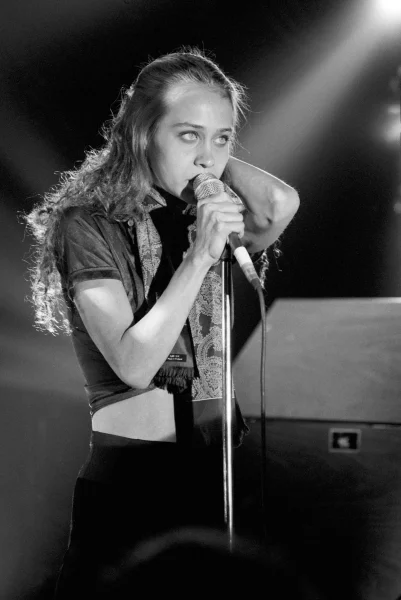
The album opens with “I Want You to Love Me”, one of the best intro tracks in recent memory. The song begins with a simply electronic drum pattern before bringing in more piano and bass. It’s the most traditional sounding that Fiona will sound for the next 52 minutes. The song builds in intensity as Apple’s voice gets more aggressive and louder until she completely breaks free of the structure and doing something truly original. Lead single and grammy winning “Shameika” features a driving instrumental that goes between fast and loud and slower moments. Dealing with childhood bullying, the song sees Apple gain confidence and seeing her potential. She describes herself as “pissed off, funny and warm”.
The title track plays around with repetition, featuring spoken word verses and a hypnotic chorus (and references to inspirations like Kate Bush). As the song concludes, the pace builds and more of the world around her is shown (including her dogs barking in the background, a reminder of the DIY style of the record). “Under the Table” shows how Apple displays her anger and the expectations for her to stay quiet. The song grows in intensity, with her voice hitting especially hard at the 2:24 minute mark, pushing my headphones to their limit. The song also features the use of stronger language, backing up her frustrations.
“Relay” is a highly repetitious song, featuring a refrain that sounds like a middle school lunch table chant “evil is a relay sport when the ones who’s burned turns to pass the torch”. It switches between this refrain and very bluesy verses focusing on resentment. The song comes to a gradual stop, featuring hushed vocals and vulnerable lyrics showcasing anger (“just to throw my anger out the door”). “Rack of His” showcases more of Apple’s sense of humor, featuring witting lyrics showing romantic frustrations with a partner putting in no effort. It paints a picture of a man stuck in his own head, only broadcasting anger and vanity. This is another instrumental that grows more complex throughout it’s runtime.
Newspaper is among the heaviest moments of the record, featuring a hypnotic, entrancing rhythm and hard hitting percussion. Fiona gets angrier as the song progresses, delivering the same lyrics with more and more passion as the drums get louder and faster. Lyrically it shows Apple witnessing another woman fall into the same relationship she was once in, feeling closer to her as a result and wishing she could help. She states that “I too used to want him to be proud of me” and “I wonder what lies he’s telling you about me to make sure that we’ll never be friends”. She once again shows the societal pressures placed on women, stating that “it’s not what I’m supposed to do”. She’s not going to let a man stand in her way and she will liberate this other woman from the toxic situation she was once in.
The last two minutes are one of the rawest portrayals of anger I have ever seen in music. “Ladies” and “Heavy Balloon” contrast one another, the former being one of the most pristine songs on the record and the latter featuring very guttural vocal delivery. The two songs pair nicely together on the record. “Cosmonauts” is the highlight of the album and possibly Apple’s entire career. It features a more traditional song structure and a lyrical focus on if a relationship can truly ever work long term. It’s such a raw look at romance and the impact it has on a person. The song features one of the best builds on the record and its most striking lyrics (“make lighter all the heavier” being a personal favorite). She writes “now let me see, it’s you and me, forgive good God”, showing that she’s just alone with her partner now. the song builds into a repeated phrase, “start it off”, which she says with more and more intensity until you can physically hear how strained her microphone is. It’s a phenomenal song.
“For Her” has the most breakneck pace of any song here, changing its rhythm at least 5 times in less that 3 minutes. It is fiery in its hypnosis and display of frustration. It grows with anger before slowing down with pure pain. She displays a rich duality between the frantic start of the song and the dramatic, devasting final moments. “Drumset” gives the listener a moment to breathe before the record closes, featuring one of the most cutting lyrics of the record: “why did you take it all away, why did you not want to try”.
“On I Go” is the intense, menacing outro of the record. It features the darkest production of the album, ending the record on a more haunting note. Apple ends the record saying that “up until now in a rush to prove, but now I only move to move”; she has nothing left to prove to anyone, she does everything for herself now. it’s a fitting final line to the record, and seeing how long she takes to release records, maybe her discography as a whole.
“Fetch the Bolt Cutters” is one hell of a record. It is just about the most unique sounding album that I have ever heard, one that truly puts Fiona Apple in a league of her own. At times the record can be funny, at other points it’s emotionally devasting, but throughout its runtime it oozes personality and total artistic control. Apple operates well outside the realm of traditional song structure during this record, and it makes for a near perfect record. The album has not left my rotation for well over a month now, and I don’t see how it ever could. It’s a 10. Very few albums have this sort of impact on release and show this much pure creativity. A career best, and one of the best of not just this decade, but the 21st century as a whole.