
















On September 18th, 1995, the Furman men’s soccer team had a chance to not only beat the University of South Carolina, but also to prove themselves in front of soccer legend Edson Arantes do Nascimento, who is better known as Pelé. Pèle was there to dedicate the new Stone Stadium.
This game was the culmination of 73 years of soccer history.
The Gamecocks were up a goal early in the game, but Furman senior Bubba Self tied the game with 39:37 left in regulation. The game continued to be tied, and then overtime began.
To understand the importance of this game, we must travel back to 1922: the birth of Furman Soccer.
In the early 1900s, soccer was completely unknown in the South, but Furman was interested in the sport. The university brought in a plumber who had finished working on a Masonic Temple in Greenville to teach soccer to the Furman Students, but interest faded until a team was officially formed in 1934. On Feb. 9, this team faced off in the first intercollegiate soccer game in South Carolina, taking on Clemson. Furman won this game 1-0 off the foot of junior Rel Robinson, and went on to play from 1934 to 1936, recording games against Clemson, Davidson and Asheville School for Boys, and going 4-4-2 in that stretch.
In the first few years of Furman transferring to its new campus in 1963, the soccer team bounced from coach to coach, which hurt their legitimacy. The sport received the least amount of funding of any sport and operated without scholarships. It would take 10 years for the program to see a winning season, which happened by a record of 7-6-1.
Starting in 1968, the first long-term head men’s soccer coach was Paul Scarpa, who was also the Furman tennis coach. While Scarpa was an incredible tennis coach, he struggled to coach soccer. By the end of 1978, Scarpa began to see a rising star in player John Tart. Tart would continue to succeed as a player through his senior year. He was the team captain, and while Scarpa was coaching tennis, he organized team practice in the off-season. These actions led Scarpa to appoint Tart as an assistant coach in 1981. In the following season, Furman went 8-9 and Scarpa stepped down, finishing with a career record of 61-106-13.
In 1982, Tart became the next head coach. In his first season, the team went 5-11-1. The team struggled the following year, but in 1983, they went 11-6-2 and won their first-ever Southern Conference Championship.
Before the 1984 season, Umbro began using Furman University to host its summer soccer camps. Umbro is a British-based textile company that specializes in Soccer and Rugby equipment. Tart realized that the Umbro Summer Soccer Camps would be full of players who excelled at soccer. He recruited six kids, and those players were the first in program history to receive grants-in-aid. That year’s team consisted of 13 freshmen, seven sophomores, and one junior, and again went 11-6-2, winning their second SoCoN Championship.
Tart amassed a total record of 137-92-21 over 13 seasons, but before the 1995 season, he became the head coach of UNC-Charlotte.
He left after providing Furman with 10 SoCoN Championships, two trips to the NCAA playoffs, four SoCoN Coach of the Year awards, and other accolades. Gene Stone, owner of Stone Manufacturing, had informed Tart that he was going to sponsor a new soccer stadium. Stone Manufacturing had recently bought Umbro for the United States, and Stone was going to bring their star athlete, Pelé, to speak.
Back to th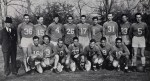 e South Carolina game on September 18th, 1995: overtime began, and neither side was able to take the edge and score.
Right before the end of the overtime, Clint Mathis, a USC player, was fouled. The referees added four seconds to the clock and allowed Mathis a direct kick, which he successfully scored. Furman protested the game, but the game still ended in a heartbreaking loss. To end the 1995 season, Furman finished 11-5-3 and outscored all opponents 38-16.
While that season was full of highs and lows, Furman soccer would only continue to improve through the 1990s, 2000s, and 2010s. The 2025 season was the year the men’s soccer team would finally make it to the NCAA College Cup, competing in a Final Four matchup against Washington. And while the team might not have won it all, the players should be proud of the legacy they continued.

