










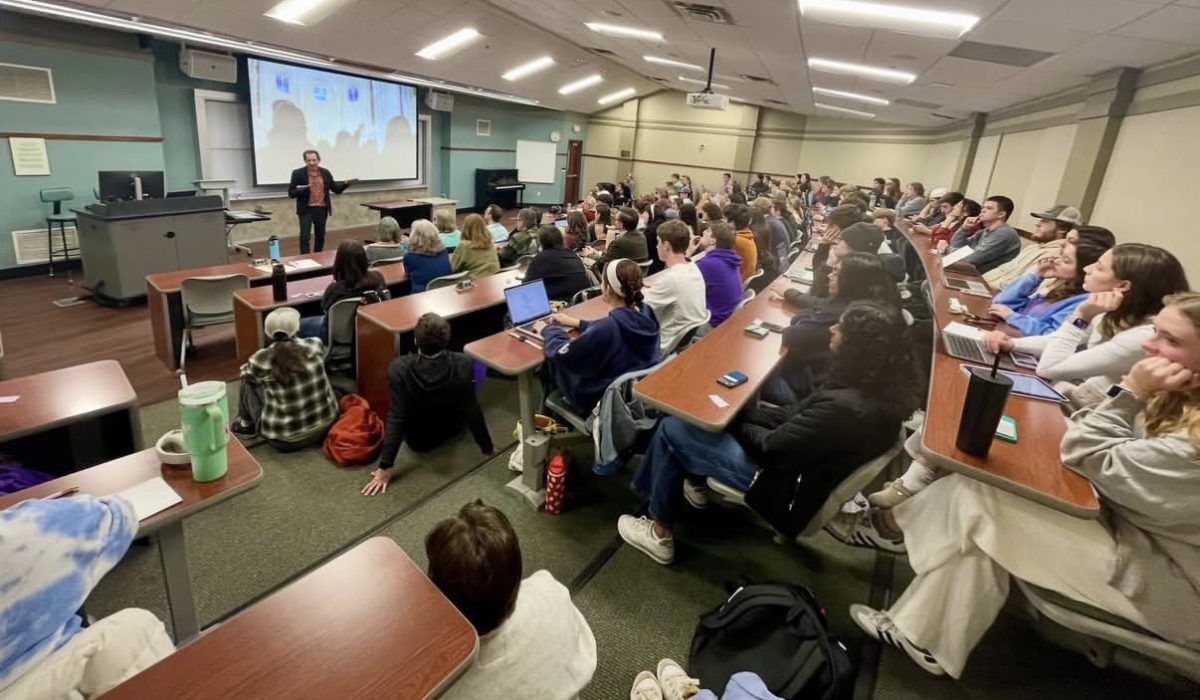
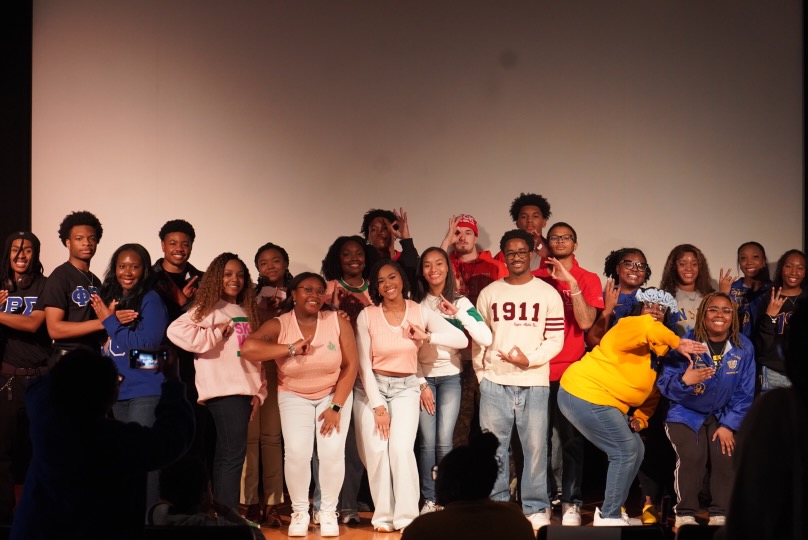









On Tuesday, Sept. 30, the Women’s, Gender and Sexuality Studies Department hosted “‘If Black Lives Matter, Protect Us While We’re Alive’: On the (Im)possibility of Protection” Cultural Life Program. This was the first installment of a four-part series that aims to discuss the thematic idea of resistance and how it impacts the construction of modern society.
According to Women’s, Gender and Sexuality Studies department head Dr. Kathleen Casey, this speaker series will critique the ideological and intellectual perspectives of resistance and how they can “scrutinize truth.” The academic department hopes to encourage critical thinking on this topic to better prepare students for complex conversation topics.
During the speaker event, Dr. Brendane A. Tynes presented excerpts of her dissertation, “I Can’t Die. I Won’t.”: Towards a Radical Reimagination of the (After)Lives of Black Women in Baltimore,” discussing the disproportionate impact of “mis/recognition” on the experience of Black women and nonbinary survivors in comparison to Black men.
“Mis/recognition,” Tynes explained, is a bias in which stereotypes and cultural perceptions negatively impact the way a person is perceived based on race, gender identity or sexuality. In her presentation, Tynes suggested that modern American society holds the belief that Black women are less valuable than other people, facilitating violence against them. She cited the portrayal of Black women in the media and pay discrepancies between Black women and their male or white counterparts as evidence of this perception.
Tynes asserted that modern society depicts Black women as deserving of violence and unworthy of protection, limiting efforts to condemn or seek justice against their attackers. As such, Black women lose the ability to possess a victim identity like that of white women, allowing a cycle of violence against Black women to continue. Because there isn’t a social pressure to reform perceptions of Black women, the potential for change is limited.
Throughout this presentation, Tynes questioned, “Even if they could, would they have helped me?” She believes that current world leaders and educators fail to adequately equip others with the ability to combat “mis/recognition.” Instead, current political policy furthers the rhetoric that Black women are nothing more than a punching bag, reinforcing the bias. Tynes mentioned that, culturally, Black women are expected to carry their families, so they should also be expected to carry this violence with them.
By drawing on her personal experiences living in Baltimore as a Black woman, Tynes emphasized that “mis/recognition” has been used as a means to perpetuate existing social systems by diminishing the worth of Black women. She described multiple instances of unsafe conditions in Baltimore, such as being followed while walking with friends and being publicly ridiculed, only for no one to intervene. She suggested that this would not have been the case if she was white.
This phenomenon is especially true for situations in which Black men commit acts of violence against Black women. Tynes reflected on the experience of a Black woman living in Baltimore who was followed and verbally harassed by a Black man. After running into a hotel expecting support and help, she was verbally assaulted by a visitor who saw the situation as a quarrel between a woman and her “baby daddy,” a stereotypical and racist perception. Rather than recognizing the cry for help, this woman was ignored, showcasing how “mis/recognition” is used to belittle Black women.
Not only did this Cultural Life Program bring awareness to violence against Black women, but it also called on the student body to take action. Tynes asked students to ponder the question, “If democracy won’t save [Black women], if finding the ‘right’ Black woman won’t save us, what will?”
By identifying the causes of violence against Black women and refusing to accept violence as a cultural marker, Tynes asserted that current democratic structures can be rewritten to protect Black women and their identities. She finished the presentation by calling on the student body to “operate within the space of refusal.” While lacking specific instruction, she suggested that there is hope for change, even though the current reality may be unjust and unfair.
For students interested in attending the second installment in this four-part Cultural Life Program speaker series, the event “Reproductive Justice & Resistance” will take place on Tuesday, Oct. 28, from 5-6 p.m. in Furman Hall 214 (McEachern Lecture Hall).