

















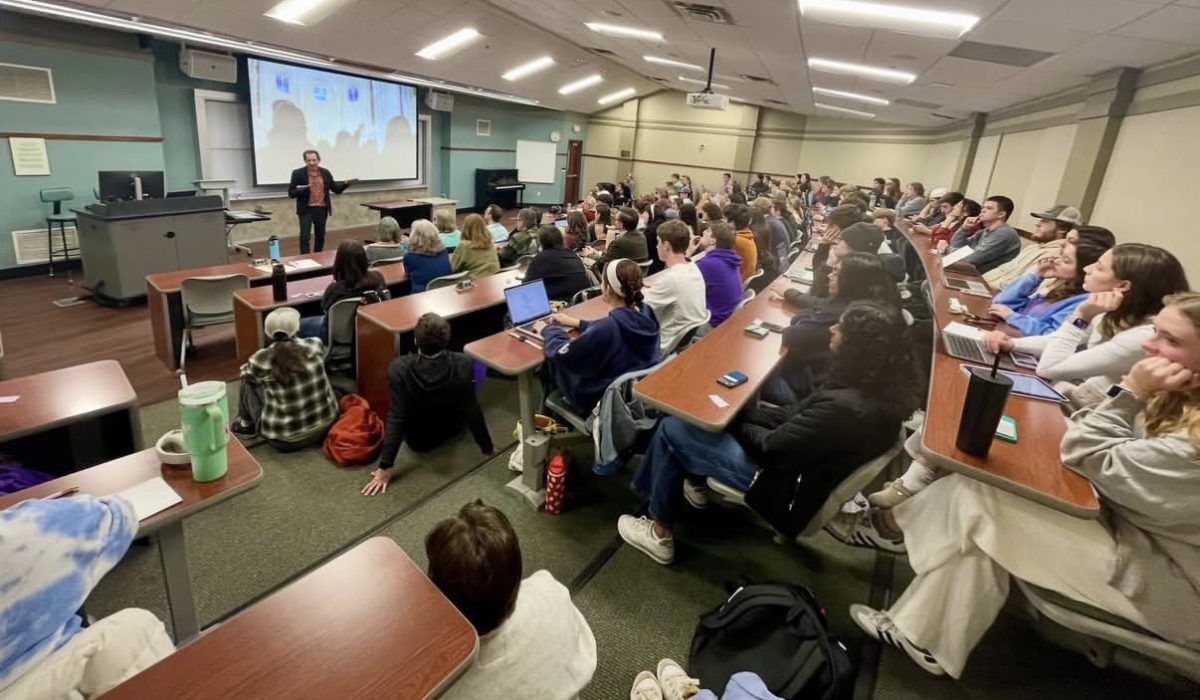
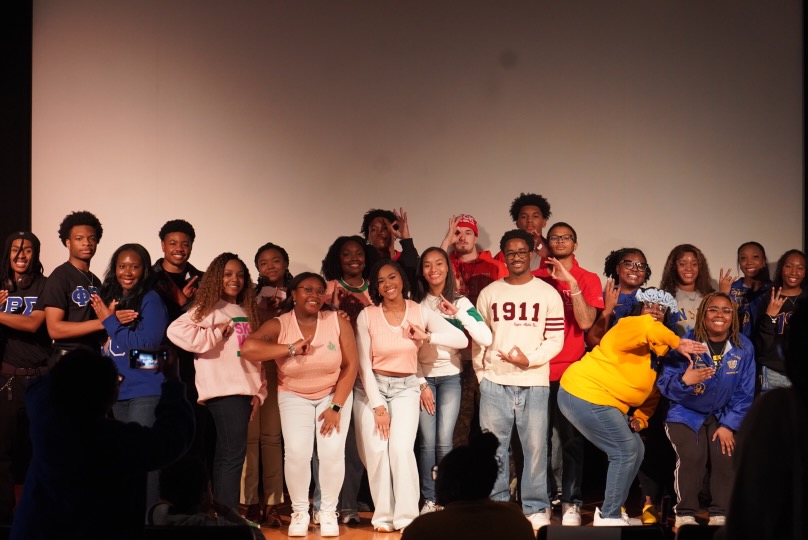










On Tuesday, Jan. 13, Sigma Chi, in partnership with the Sociology Department, hosted an anti-hazing Cultural Life Program titled “Understanding the Impact of Hazing.” The program aimed to bring awareness to the stigma that surrounds reporting hazing while also informing students of the variety of acts that constitute “hazing.”
Dr. Joseph Merry began the CLP by providing a sociological context of hazing, and he explained how hazing has woven its way through the higher education system. Dr. Merry stated that social processes, like hazing, start by asking who benefits from the named system. According to Dr. Merry, this power discussion is crucial for hazing to begin, and institutions provide the grounds for a cultural ripple effect. In higher education, this ripple effect can be described as a tradition or culture centered around specific practices or ideals.
Dr. Merry explained that hazing has become incredibly intertwined with the college experience. Because its existence is undeniable, certain practices should take place to reduce stigma surrounding hazing reports and to limit the practice itself.
Angela Ging, M.Ed., of StopHazing led the discussion by defining hazing as “any activity expected of someone joining a group that humiliates, degrades, abuses, or endangers, regardless of willingness to participate.” Hazing is conditioned by peer pressure. According to Ging, it manifests in the idea that individuals lack free will, so they must partake in the deemed appropriate acts.
Ging described and defined a spectrum of hazing, which ranges from the most common and least violent to the least common and most violent. She explained that while violent hazing is the least common, it is the most publicized by the media, and thus impactful to the public’s perception of hazing.
Out of all hazing acts, Ging stated that the most common are acts of intimidation. “Death by a thousand cuts,” said Ging. “This idea that hazing is only physically violent is incorrect. Social isolation and silence periods are by far the most common, and can do the most amount of damage.”
Ging argues that intimidation hazing should be targeted. In increasing recognition of higher frequency acts, Ging hopes to bring down national hazing levels at the collegiate and high school levels. In doing so, she believes that the culture around college involvement can be changed for the better. As nearly 55% of college students are involved in some sort of hazing acts, targeting high-frequency groups like varsity athletics and Greek Life helps make a substantial difference.
Ging noted that not everyone is the type of person to directly interfere when witnessing hazing, and she asked who in the audience would intervene. The numbers, unsurprising to her, were low. To combat this, she proposed a five-step process of bystander intervention.
First and second, individuals must notice hazing and interpret it as a problem. This starts by raising awareness of hazing. In partaking in awareness seminars like “Understanding the Impact of Hazing” CLP, students will be able to easily recognize hazing.
Third, recognizing the responsibility to intervene can inspire a community to take responsibility for its larger support systems. This third step pairs with step four, which is developing skills to help. The three main methods of this step include confrontation, shifting attitudes, and shifting forces. For those who have no issue with confrontation, Ging explained that direct intervention can be instrumental in reducing the heat of a hazing situation.
Through shifting attitudes and forces, bystanders can choose to increase awareness within their community by “recognizing past actions” and partaking in “large group dialogue to better each other.” Ging believes that real change will occur through these passive acts, ultimately shifting club and organization dynamics.
Additionally, Ging believes that providing alternatives to hazing is a great way to encourage camaraderie without inflicting potential long-term damage on willing or unwilling participants.
Finally, Ging recommends taking action. Ging pointed out that action against hazing can be direct or indirect. Direct action often resembles openly discouraging hazing acts. By taking direct action, Ging hopes to spark a ripple effect across college culture, sending the message that hazing is not a required part of a college experience.
Indirect action is promoting discussion and shifting the understanding of hazing. Ging believes that a conceptual change can occur throughout campuses. If people support those who have gone through hazing, anti-hazing culture can overtake college life.
Ging encouraged people to have conversations to reduce the stigma that surrounds hazing. If awareness of hazing increases, hazing can be significantly reduced.
Furman University will investigate any known hazing incidents. Students are urged to report any suspicious hazing activity to the best of their abilities. If you or anyone you know witnesses hazing in action, contact the Furman University Police Department at 864-294-2111 or through the LiveSafe app.
Additionally, if you or anyone you know has been impacted by hazing and wish to report it or access support resources, the Campus Conduct Hotline can be contacted at 866-943-5787 or through the Hazing Incident Report here. The report form can be submitted anonymously by student request. For support resources, students are encouraged to reach out to the Trone Center for Mental Fitness at 864-294-3031, #3.